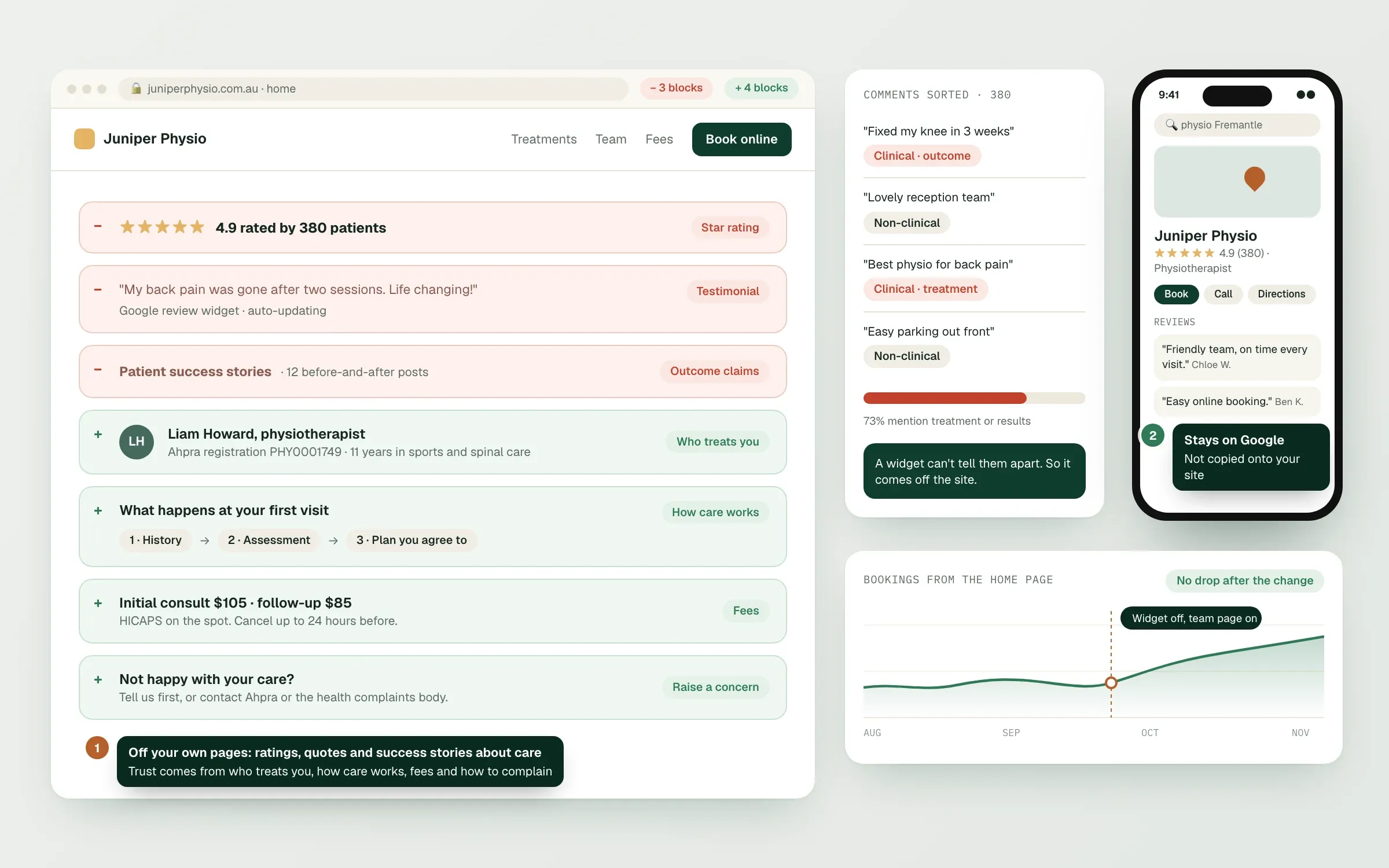
This is the most common Ahpra problem we find on clinic websites, and the easiest to fix. A review widget that scrolls five-star Google reviews across the homepage feels like good marketing. Under the National Law it's usually a testimonial in advertising, which is prohibited, and a breach is a criminal offence with fines of up to $60,000 per offence for an individual and $120,000 for a company. This read explains where the line sits, what we remove from clinic sites and what we put back in its place.
What the rule says
Section 133 says you must not advertise a regulated health service in a way that uses testimonials or purported testimonials about the service or business. Ahpra's advertising guidelines explain that this applies to testimonials about clinical aspects of care, such as symptoms, diagnosis, treatment and outcomes. Comments about non-clinical things, like the booking process, the waiting room or the staff's friendliness, aren't treated as clinical testimonials.
The trouble is that real reviews don't separate neatly. "Lovely reception staff and my back pain is finally gone" is half fine and half a clinical testimonial.
What we remove from clinic sites
- Google or Facebook review widgets embedded on the site
- Star ratings in heroes, headers or schema markup (aggregate rating schema displays ratings in search results too)
- "Patient stories" or "success stories" pages describing treatment outcomes
- Quotes from patients about their condition or results
- Before-and-after photos with captions from patients
- Influencer or ambassador content describing their treatment
- "As recommended by" or "rated 4.9 by patients" claims
We also check page templates and the CMS so these can't creep back in: if the component doesn't exist, nobody can add it.
What we put back instead
Trust doesn't need testimonials. On the clinic sites we build, it comes from:
- Named practitioners with their roles, registration and a short professional background
- A clear "how it works" so people know what to expect
- Transparent fees, consistent across the site
- Safety and complaints information, including how to raise a concern
- Accreditation and memberships that are real and accurately described
- Non-clinical service information, such as response times, opening hours and accessibility
Pages built like this convert well because they answer the questions people actually have before booking.
Cosmetic clinics: stricter again
The 2025 guidelines for advertising higher-risk non-surgical cosmetic procedures add specific limits on testimonials, influencers and images. If you run a cosmetic clinic, read cosmetic clinic websites under the 2025 guidelines too.
Want us to scan your site for testimonials? Start on Connect.
Sources
All checked 21 Nov 2026.
Finished this read?
- OpenedToday
- FinishedNot yet
Written by
Kevin MatthewsHead of Development
Kevin leads engineering at SingletonTec and has spent 10+ years building production-grade websites, apps and systems for businesses.