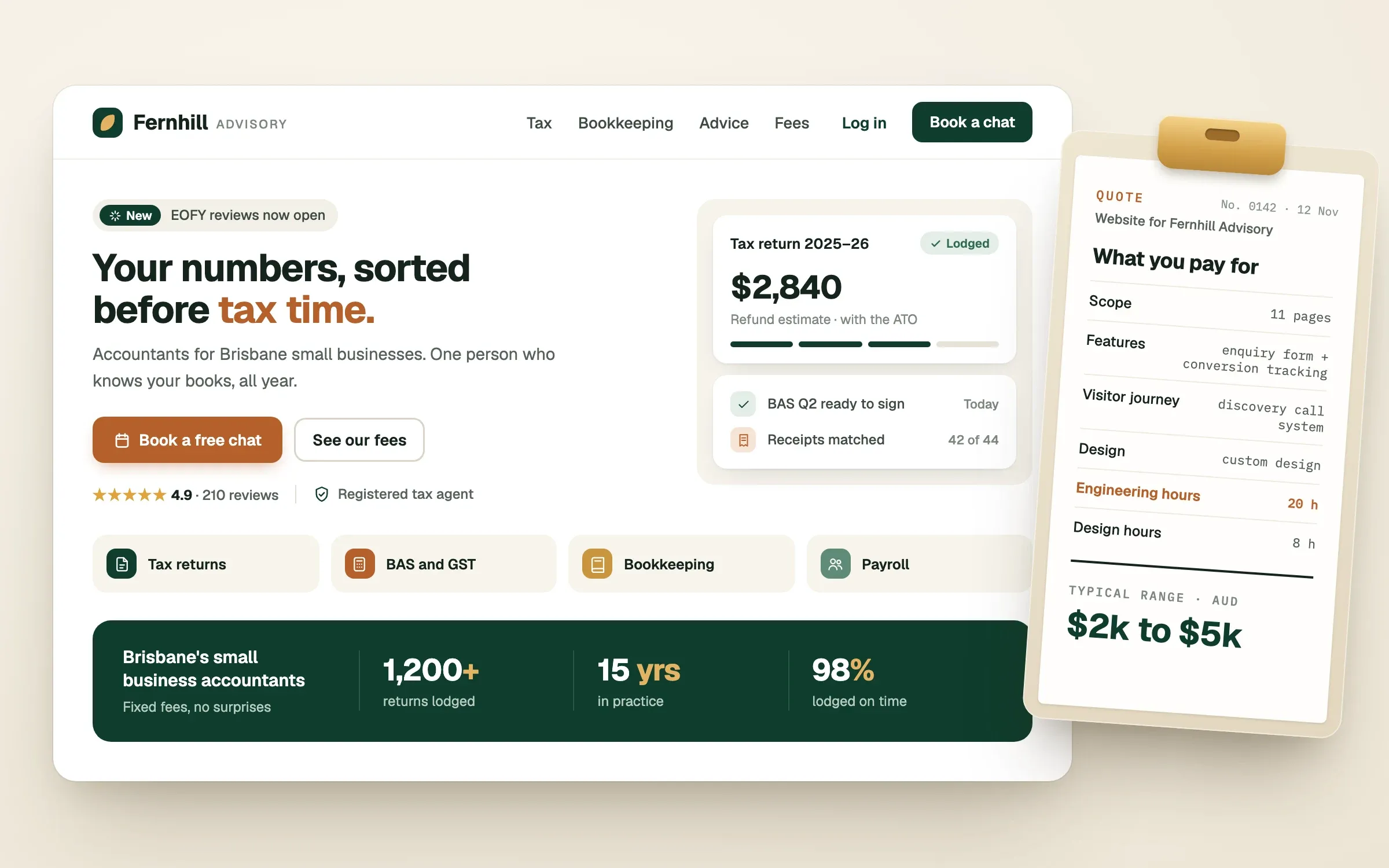
A business website in Australia typically costs anywhere from a few thousand dollars for a small, simple site to well over fifty thousand for a custom store or platform. That is a huge gap, and it is not random. It exists because two sites that look similar on a screen can hide very different amounts of work behind them. This guide explains what moves the price, so you can read any quote with confidence.
How much does a website cost in Australia?
Most small and medium businesses land somewhere between $3,000 and $30,000 for a professionally built site, with online stores and custom systems sitting higher. Treat every figure in this read as a rough guide only. Real prices vary widely with what you need.
The honest answer to "how much?" is always "it depends on the scope". That sounds like a dodge, but it is simply how building works. A five-page site that explains your service is one job. A site that takes payments, books appointments and talks to your accounting software is another.
What actually drives the price?
Price is driven by five things: scope, features, the visitor's journey, design effort and engineering hours. Everything else is a detail of those.
Scope is how many pages and types of pages you need. A brochure site with a handful of pages costs less than a site with service pages, a resource library and location pages.
Features are the things the site does, not just shows. Online payments, booking, member logins, quote calculators and connections to other tools each add real engineering work.
The visitor's journey is how someone moves from landing on the site to becoming a customer. Mapping that journey properly takes thinking time, and it is usually the difference between a site that looks good and a site that earns its keep.
Design effort covers whether the look is made for you or adapted from something that already exists. Custom design takes more hours, and it is yours alone.
Engineering hours are the actual hours a lead engineer spends building, testing and fixing. This is the most honest way to price software. Same work should mean the same price, whoever is asking.
Typical website price ranges in Australia
The table below shows rough ranges for common project types. Your project may fall outside them.
| Type of site | Typical range (AUD) | What usually sits behind it |
|---|---|---|
| Simple brochure site | $3,000 to $10,000 | A few pages, contact form, basic search setup |
| Custom business site | $10,000 to $30,000 | Tailored design, many pages, a content system you can edit |
| Online store | $5,000 to $50,000 or more | Products, payments, shipping, tax, integrations |
| Custom web app or portal | $30,000 and up | Logins, dashboards, workflows, connections to other systems |
Notice how wide each band is. A store with 20 products and one payment method is a very different job from a store with thousands of products, subscriptions and stock syncing.
What do people forget to budget for after launch?
The build is only the first cost. A website also needs a yearly running budget, and skipping it is the most common way a good site quietly decays.
Plan for these ongoing items:
- Domain name renewal and hosting, the place your site lives online.
- Security updates and backups, so one bad day does not become a lost site.
- Content changes, such as new services, prices and staff.
- Search and marketing work, because a site nobody finds earns nothing.
- Reporting, so you can see what is working.
At SingletonTec, small changes you are in control of are not charged, and clients move onto a continuous support program after launch, so the running costs are discussed up front rather than discovered later.
How do you get a quote you can trust?
A trustworthy quote is itemised, written down and approved by you before any work starts. It should be built from your real needs, not a package that was invented before the salesperson met you.
Look for these signs:
- The person quoting understands the work. At SingletonTec you talk directly to the lead engineer who will build it, so the plan comes from the person doing the job.
- The scope is written in plain words you can understand.
- The price is based on features and engineering effort, not on how big your business looks.
- Payment terms are clear. Be careful with large upfront deposits. Our own approach is a 15% deposit, with the balance due on completion before launch.
- You can see progress as it happens, through staging links, Figma designs and shared access to your analytics and Search Console.
Ask every agency the same question: "If someone else described the same project, would they get the same price?" The answer tells you a lot.
Finished this read?
- OpenedToday
- FinishedNot yet
Written by
Kevin MatthewsHead of Development
Kevin leads engineering at SingletonTec and has spent 10+ years building production-grade websites, apps and systems for businesses.