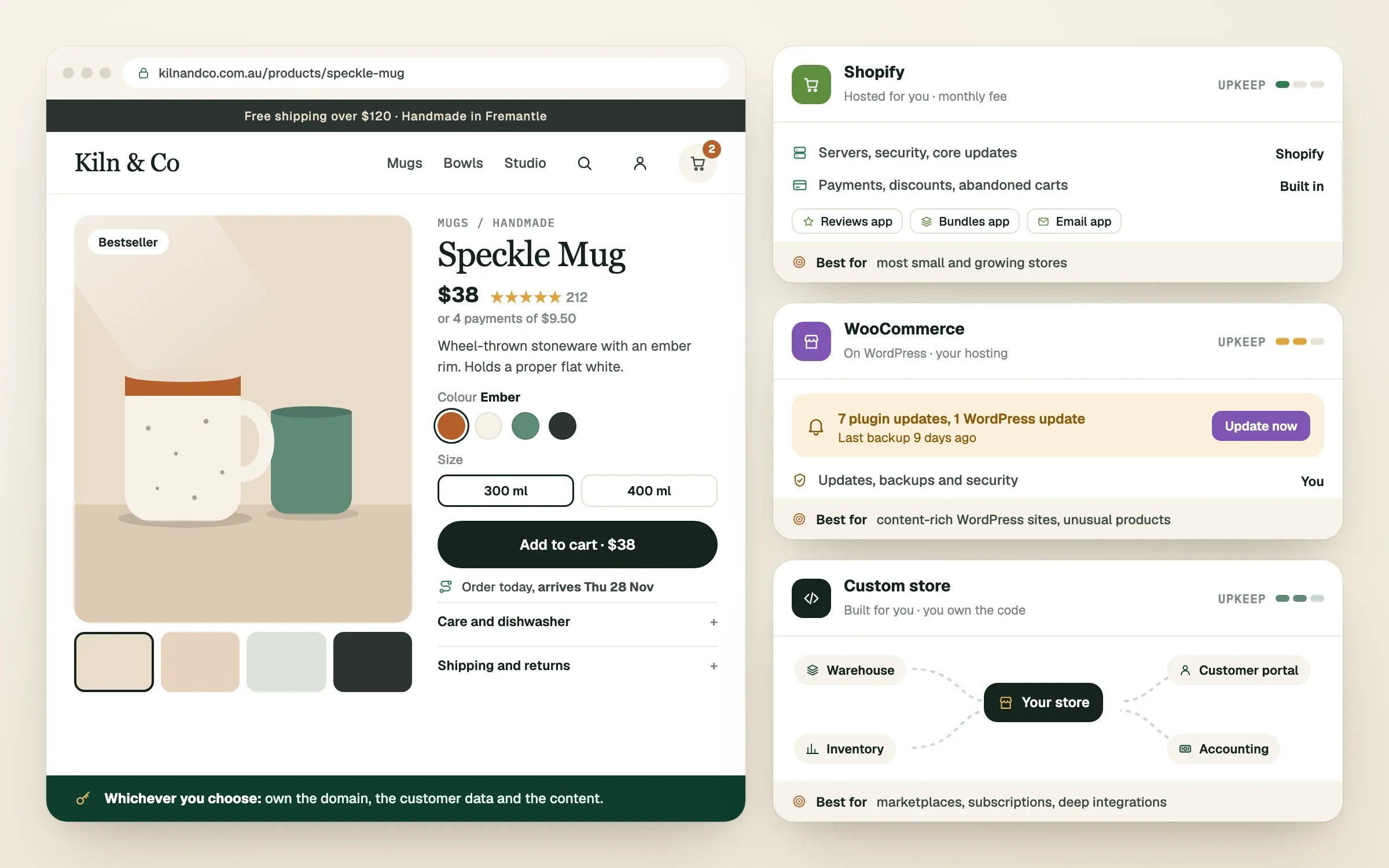
For most Australian small businesses starting an online store, Shopify is the safest and quickest option. WooCommerce suits people who want deep control and are happy to maintain more themselves. A custom build is for the unusual cases. This explainer walks through how each one works, so you can compare Shopify vs WooCommerce, and a custom store, on the things that matter to you.
What is the difference between Shopify, WooCommerce and a custom store?
The difference is mostly about who looks after the engine under the hood. An online store needs a product catalogue, a cart, payments, shipping and tax rules, and somewhere to run on the internet. The three options split that work differently.
Shopify is a hosted platform. You pay a monthly fee and Shopify runs the servers, security and core store system. You design and fill the store, and add extra features through apps.
WooCommerce is a free plugin that turns a WordPress website into a store. You choose and pay for your own hosting, and you are responsible for updates, backups and security.
A custom store is built from scratch, or from developer tools, to fit your exact needs. You own the code, and you also own the responsibility for maintaining it.
When does Shopify make sense?
Shopify makes sense when you want to sell products reliably without managing technical upkeep. It is built for exactly that, and it handles payments, checkout and hosting well.
It tends to suit businesses that:
- sell physical or digital products at a steady pace
- want a store that is quick to launch and simple to run day to day
- want built-in tools for payments, discounts and abandoned carts
- have a small team that cannot spend time on server maintenance
The trade-offs are monthly fees, transaction costs that depend on your payment setup, and some limits on deep checkout changes. Shopify can be extended a long way with custom development, and our team works across the full Shopify stack, from theme work to custom apps and integrations.
When does WooCommerce make sense?
WooCommerce makes sense when you already live in WordPress or need flexibility that a hosted platform makes awkward. Because you control the whole system, you can bend it in many directions.
It suits businesses that:
- already have a content-heavy WordPress website and want a store inside it
- need unusual product types, pricing rules or content features
- want to avoid a monthly platform subscription (though hosting and plugins still cost money)
- have someone to maintain it, or a support plan with a developer
When is a custom store worth it?
A custom store is worth it when your business model does not fit what platforms offer. This is rarer than people think, and it costs more to build and maintain.
It can make sense for:
- marketplaces with many sellers
- complex subscription, rental or quote-based selling
- stores that must connect deeply with your own systems, such as inventory, a warehouse or a customer portal
- businesses that want total control of the experience
Be honest with yourself here. Many people think they need a custom store when a well-configured Shopify store, with a few custom touches, would serve them better and cost far less. A good engineer will tell you that, even when it means a smaller project.
Side by side: how do they compare?
| Question | Shopify | WooCommerce | Custom |
|---|---|---|---|
| Who hosts it? | Shopify | You, through a host | You |
| Time to launch | Short | Medium | Longest |
| Day-to-day upkeep | Low | Medium to high | Depends on the build |
| Flexibility | Good, with apps and development | Very high | Total |
| Best for | Most small and growing stores | Content-rich or unusual stores | Unusual business models |
How do you choose?
Choose by working through four questions:
- What do you sell, and how many products do you have?
- Who will look after the store every week?
- What must the store connect to, such as accounting, stock or shipping tools?
- What is your plan for the next two years?
That last question matters most. At SingletonTec, the first thing we ask every client is where they see their brand in two years. A store built for today only can become a rebuild next year.
Payments matter too. Depending on the platform, you can offer cards, PayPal, Afterpay, Google Pay and Apple Pay. Which ones you want can affect your choice, so list them early.
Finished this read?
- OpenedToday
- FinishedNot yet
Written by
Kevin MatthewsHead of Development
Kevin leads engineering at SingletonTec and has spent 10+ years building production-grade websites, apps and systems for businesses.